March is when the gardening year really starts to ramp up in Transylvania County. The longer day length, along with the warming air and soil, triggers plants and insects to wake up from their winter hibernation. While the to-do list is starting to get pretty long, not every item listed needs to be done in your garden. Tackle the tasks that will address past problems first. Once those are complete, move along the list as time and energy allow. Remember, you should pace yourself to get the most benefit from gardening. It is a hobby that is meant to be a relaxing way to spend time in the sunshine, exercise your body and your mind, and appreciate the natural world. Enjoy!
Fertilizing- Fertilize ground covers and shrub borders with 1 pound of nitrogen per 1000 ft2.
- Fertilize your important shade trees if not done in February. Fertilizing trees and shrubs
- Fertilize rhubarb and asparagus beds early in March before growth begins. Asparagus and Rhubarb
- Ponds should be fertilized starting this month and continuing through October. Water Gardens
- Work fertilizer and lime into your garden beds per your soil test results before planting your vegetables.
Planting
- Plant your small fruit plants, grape vines, and fruit trees before the buds break. Planting fruit trees and Small Fruits.
- Transplant trees and shrubs. Planting trees and shrubs
- New trees, shrubs, perennials, and ground covers can be planted the entire month.
- Direct sow seeds of the following perennials: columbine, hollyhock, coreopsis, daisy, phlox, and sweet William.
- Plant new rose bushes late in the month. Roses
- Set out cabbage plants. A Beginner’s Guide to Vegetable Gardening
- Plant the following vegetable crowns and seeds this month: asparagus and rhubarb crowns, broccoli, cabbage, Chinese cabbage, carrots, kale, kohlrabi, lettuce, mustard, onions, parsnips, garden peas, Irish potatoes, radishes, rutabagas, spinach and turnips. Vegetable sowing calendar
- Start annual flowers and warm-season vegetables including pepper, tomato, eggplant, and sweet potato slips inside in early March. Starting seeds indoors
Pruning
- Finish pruning fruit trees. Pruning fruit trees
- Prune blueberries early in the month. Pruning Blueberries
- Prune roses late in March (when the forsythia bloom) Pruning roses
- Prune abelia, mahonia, and nandina this month if needed. Pruning trees and shrubs
- Prune spirea, forsythia, flowering quince, winter honeysuckle, weigela, and lilac immediately after flowering, but not after July 10th. In general, cut the oldest limbs near the ground level for constant rejuvenation of shrubs.
- Severely prune overgrown shrubs other than needled evergreens. Pruning in late winter and early spring may result in removing this season's flower buds; however, the results of the pruning are much better when trimmed before bud break.
- Pick off faded flowers of pansies and daffodils. Pansies will flower longer if old flowers are removed. This is also known as dead heading. Deadheading
Pest Management
- If needed, spray landscape shrubs for the following insect pests: euonymus-scale, juniper-spruce spider mites, and hybrid rhododendron-borer.
- Start your rose spray program just before bud break.
- Spray fruit trees with dormant oil before color shows in buds. Fruit Spray Schedule. Fruit Tree Spray Schedule
- Watch your apple and pear trees for fire blight and if needed, spray with streptomycin for control while the trees are in bloom.
Lawn Care
- Fertilized cool-season lawns until mid-month but no later. Do not use slow-release fertilizer on the lawn at this time of the year. Cool season grass calendar
- Apply crabgrass pre-emergent to your lawn late this month to help control crabgrass in the turf. Crabgrass control in lawns
- Seed fescue and bluegrass if not done in September. Growing Cool Season Grasses
- Mow your tall fescue lawn, maintaining a height of 3”.
Propagation
- Continue to divide perennials, including daylily, Shasta daisy, gaillardia, and coreopsis. Dividing perennials
Miscellaneous To Do
- Check garden supplies such as fertilizer, insecticides, and fungicides to see if you have adequate amounts.
- Check all garden equipment, lawn mowers, tillers, hedge trimmers, tools, hoses, and sprayers to see if they are in working order before they are needed.
- Be certain that areas around perennials including peony, hollyhock and phlox are clean of last season's growth.
- Apply pre-emergent herbicide for weed control if needed. Do not use where you will be seeding this year. Weed control in landscape beds
- Mulch around trees and shrubs.
- Turn under garden soil to expose slumbering plant-eating insects to freezing temperatures.
- Re-pot houseplants. Repotting houseplants
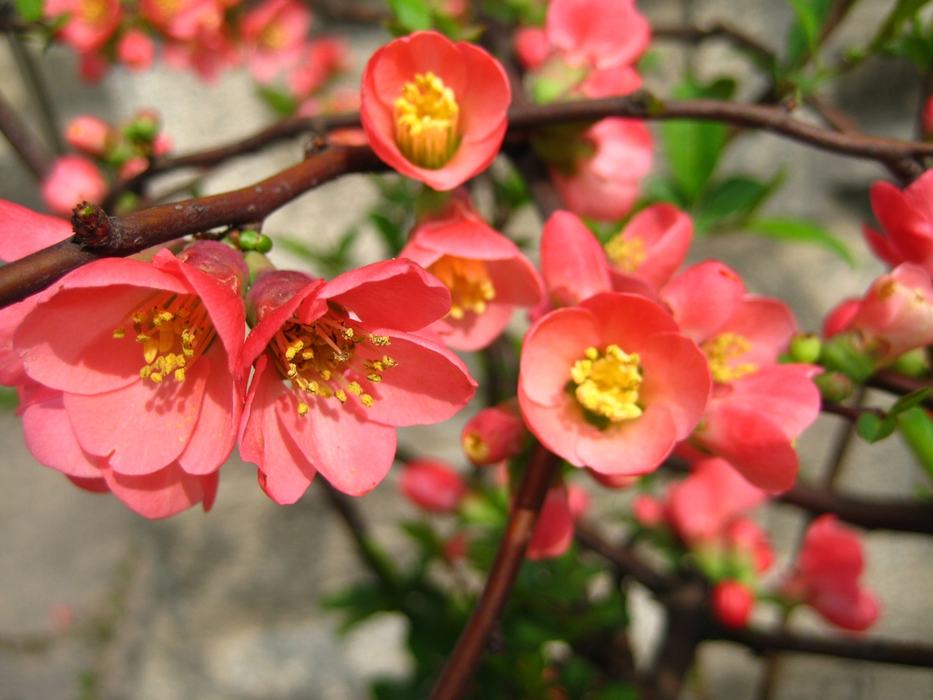
Non-native ornamental plants in bloom in March: Saucer Magnolia, Bradford Pear*, Flowering Cherry, Star Magnolia, Flowering Quince, Forsythia, Periwinkle*, Spirea Prunifolia, Thrift, Crocus, Daffodil, Hyacinth, Tulip
*non native invasive plants